Klaus in Vorarlberg / 2026
Der Kopf ist rund, damit das Denken die Richtung wechseln kannGalerie Brugger
Klaus in Vorarlberg / 2026
Der Kopf ist rund, damit das Denken die Richtung wechseln kannGalerie Brugger
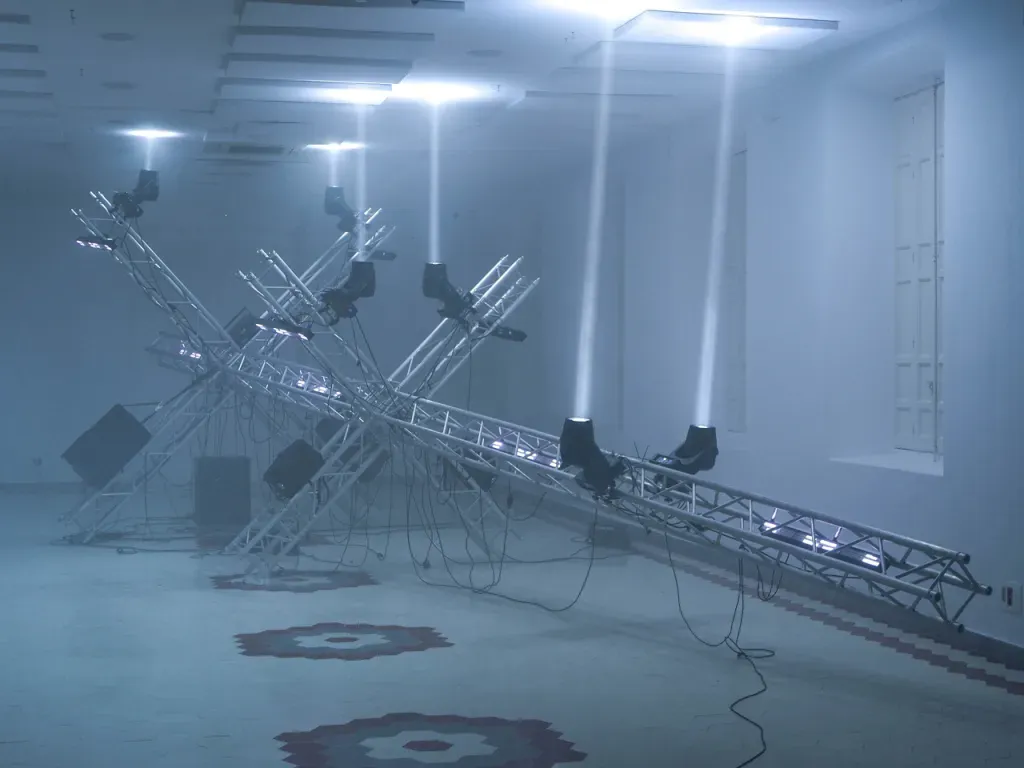
May 22 — June 01, 2026
Leo Pum @La Térmica, Málaga KRVCE festival
Everything you need to plan, apply, and move your art career forward.
Hamburg / 2026
London / 2026
Cologne / 2026
London / 2026
Milan / 2026
Oslo / 2026
Medellín / 2026
Bordeaux / 2026
 Features
Seoul / 2026
Helsinki / 2026
Prague / 2026
Bratislava / 2026
Paris / 2026
Prague / 2026
JULIO Artist-run Space / Veronika Čechmánková
I carefully keep a bottle of perfume that belonged to my great-grandmother Simone. It costs €83 on Sephora’s website, but mine is priceless. Very little is left, and what remains has probably turned, aged by the years. I don’t know whether it was her everyday perfume or the one for special occasions, the kind you ration down to the last centilitre, but I have imagined it so. It sits enthroned in my living room; I have never dared to spray it into the air, not even once. I found it in a suitcase that belonged to her, filled with fabric she had sewn into small envelopes that look like tobacco pouches, though I don’t really know what they were for: I don’t even know whether she smoked. These textile envelopes once had a function, but I no longer know what it was. I inherited them and so, de facto, they matter; I can’t get rid of them. I’ve quit smoking, so I try to find other uses for them, but they mostly lie at the back of my closet.
It is precisely these different social and intimate lives of objects that Veronika Čechmánková explores in her work, which draws in particular on the thought of Igor Kopytoff and his essay “The Cultural Biography of Things: Commoditization as Process”. Echoing the anthropologist’s dialectic, she considers the obsolescence of objects comparable to that of the human bodies that use them, and questions how their status in society changes depending on who has owned them, or which environments they have passed through.
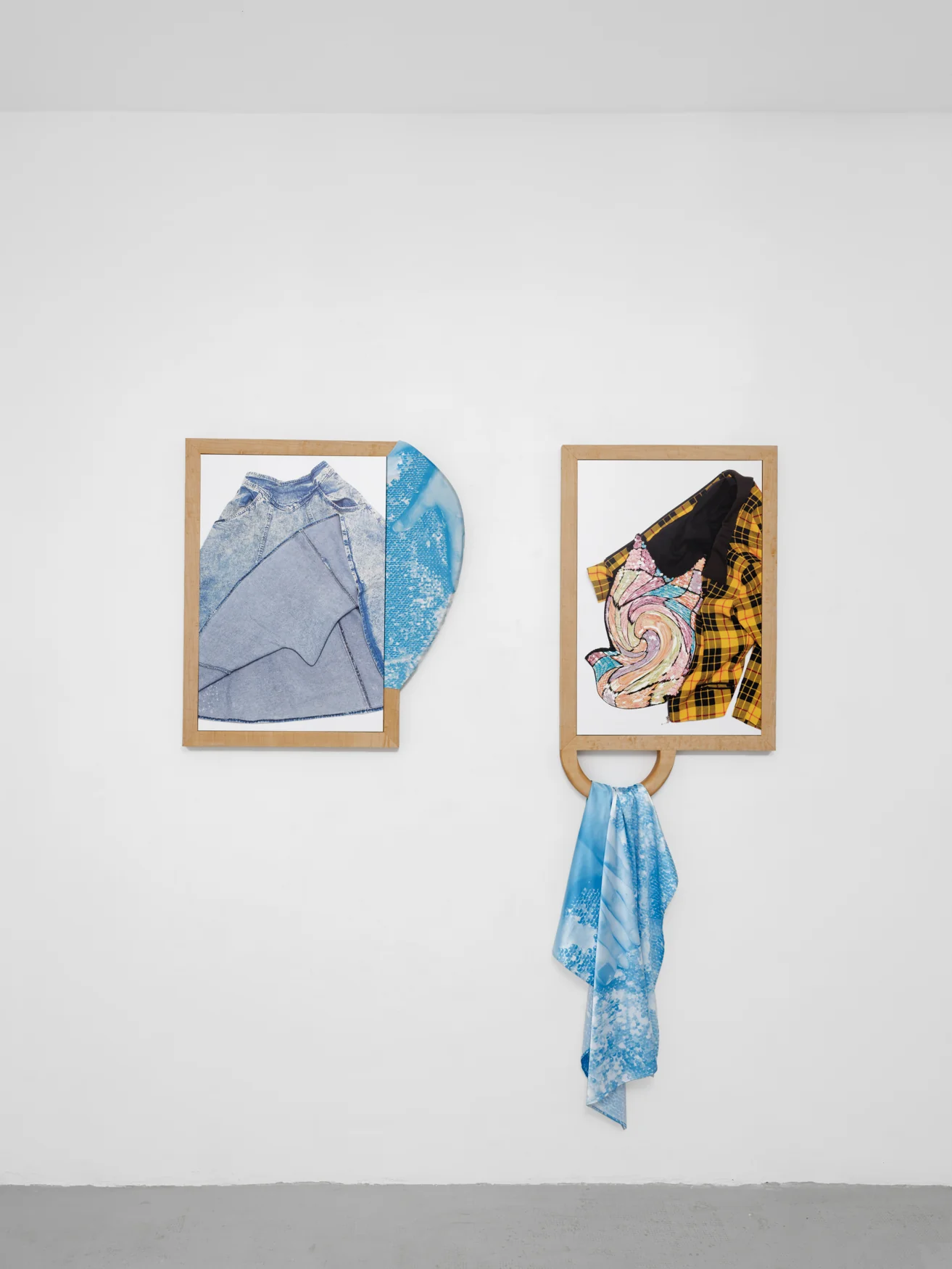
Through the exhibition From Body to Body, the artist traces the itineraries of garments that circulate from hand to hand, from skin to skin, from generation to generation. The intimate nature of clothing, worn like a second skin, becomes the subject of an exploration into what these prolongations of ourselves represent. The exhibition seeks to trace these genealogies of what is given, passed down, and bequeathed. What we find in a closet, what keeps the scent of the people who wore it. What binds us to someone and what remains after them – for this exhibition is above all a story of filiation. Its pieces evoke affective traces, the bond that is embodied in and endures through these second-hand garments. Far from being passive relics, the clothes summoned by the artist are almost conceived as talismans, which, with each new owner, become imbued with new bonds, new memories and new meanings.
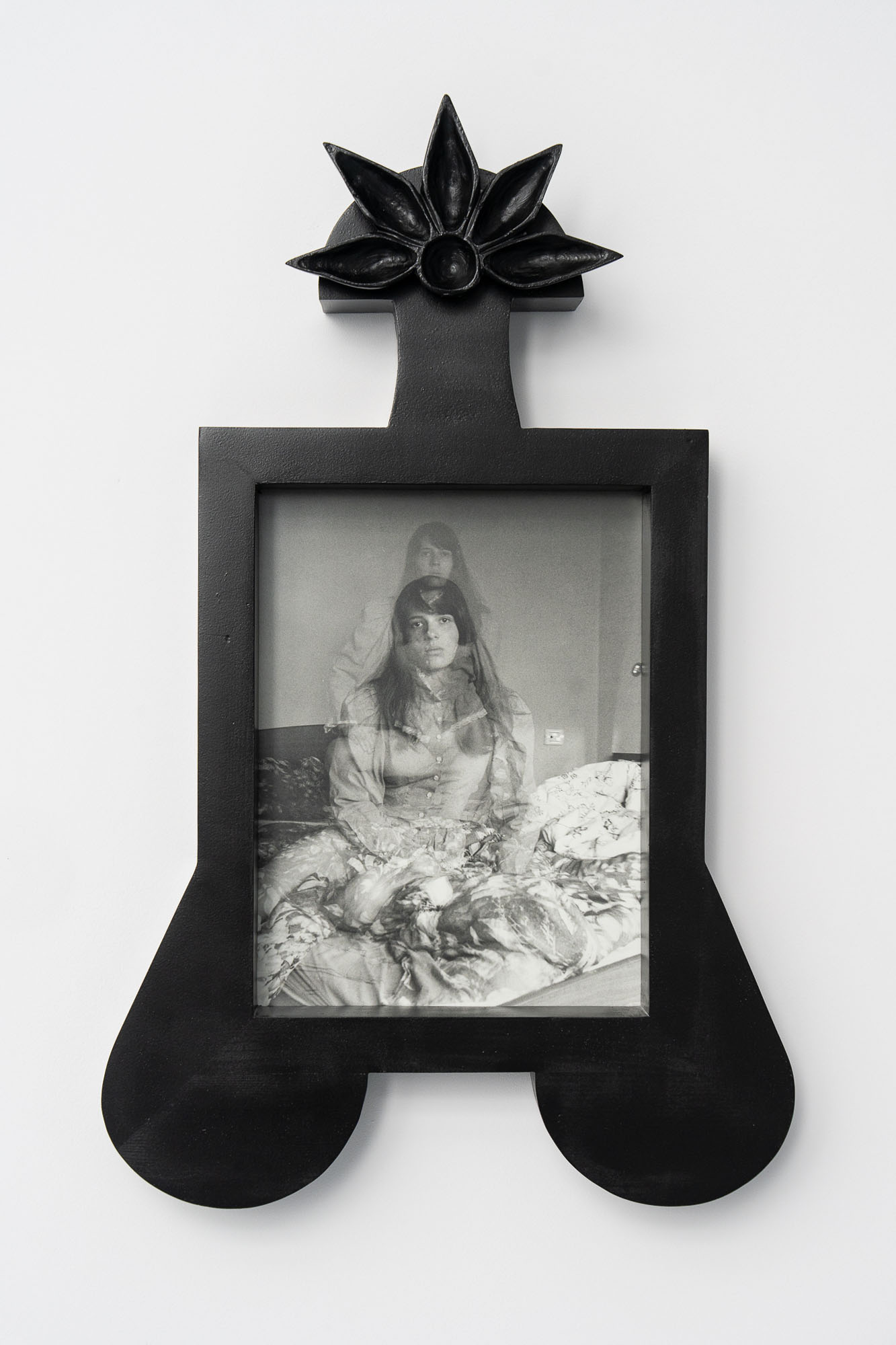
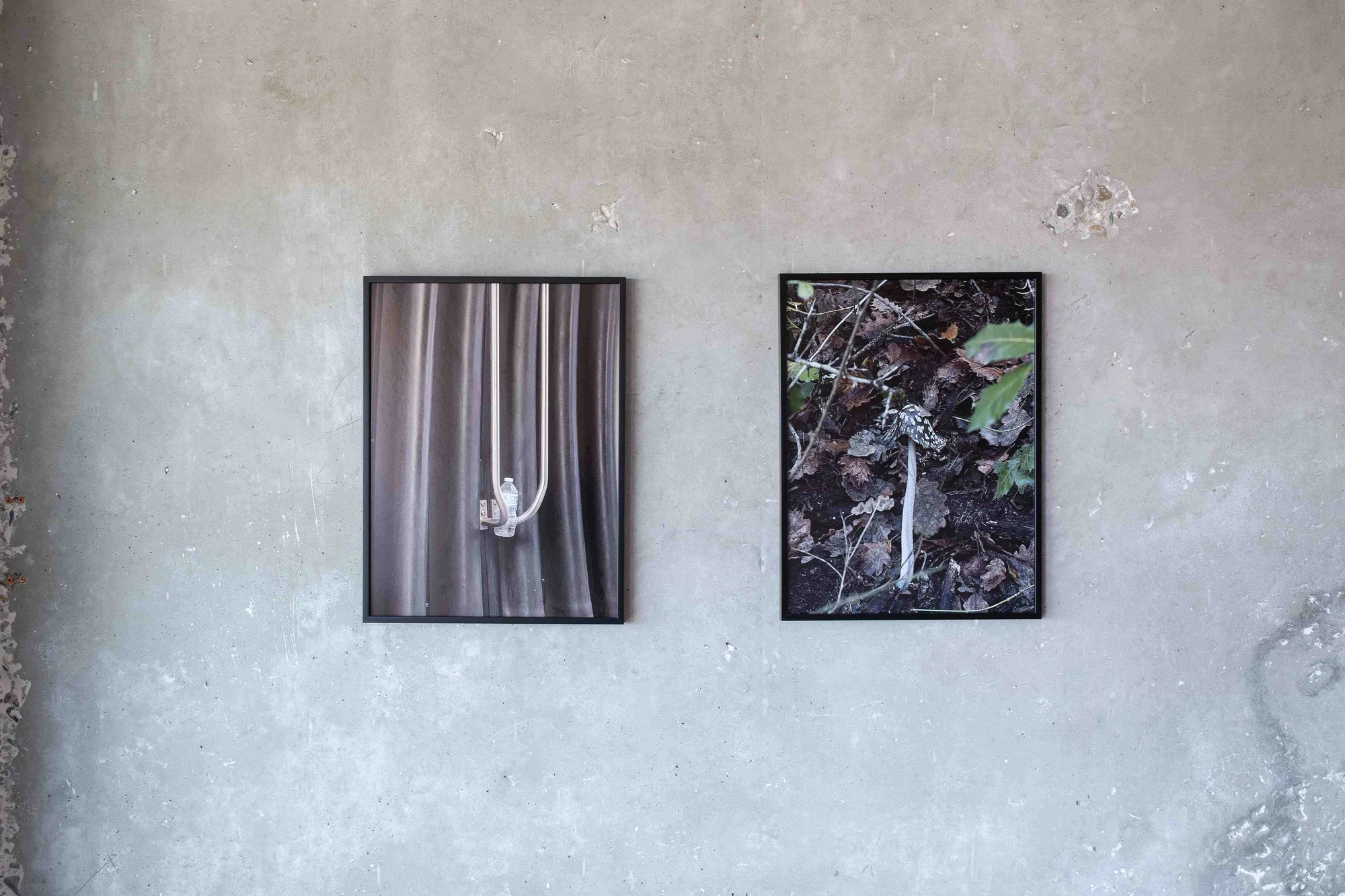
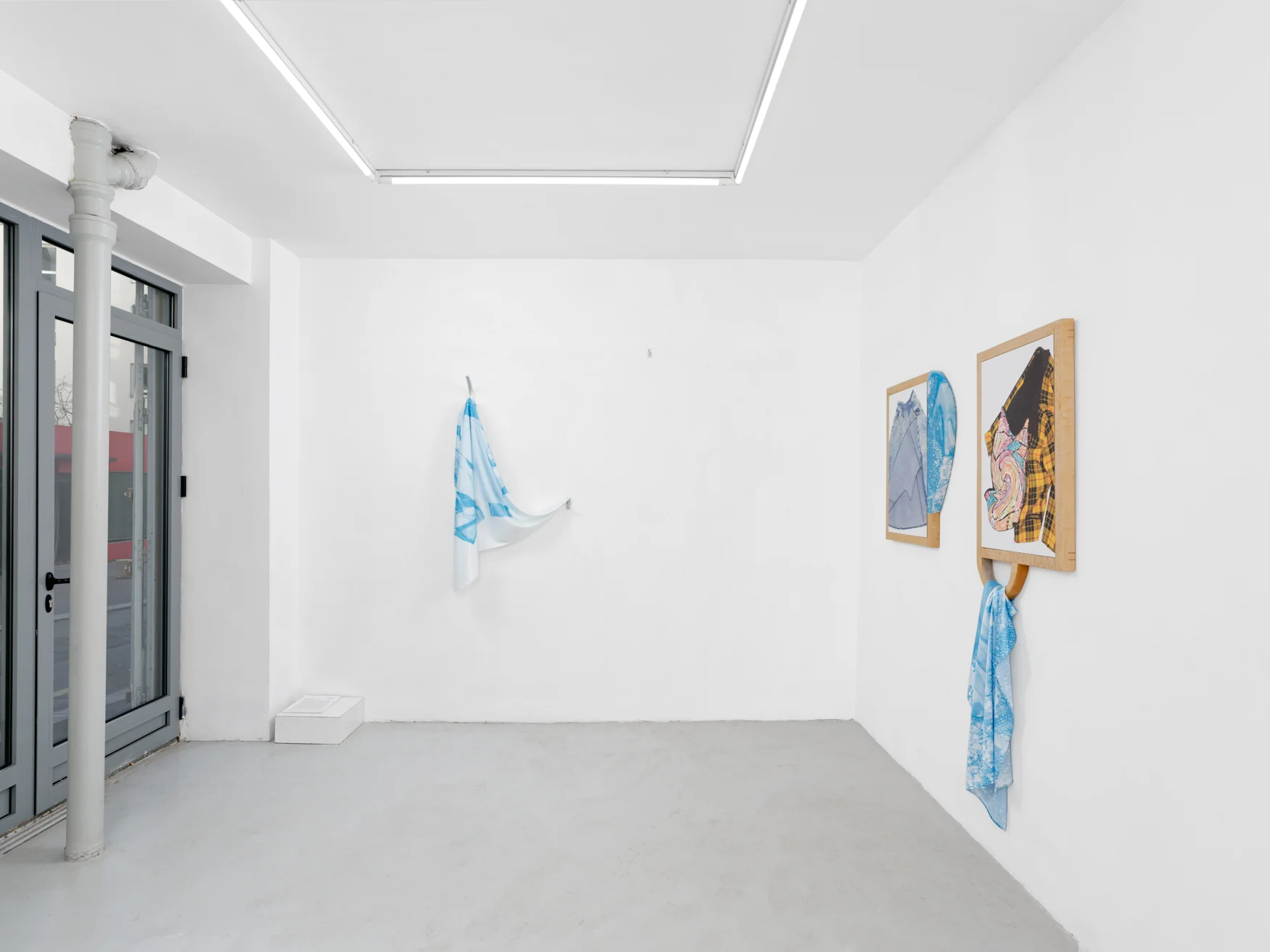
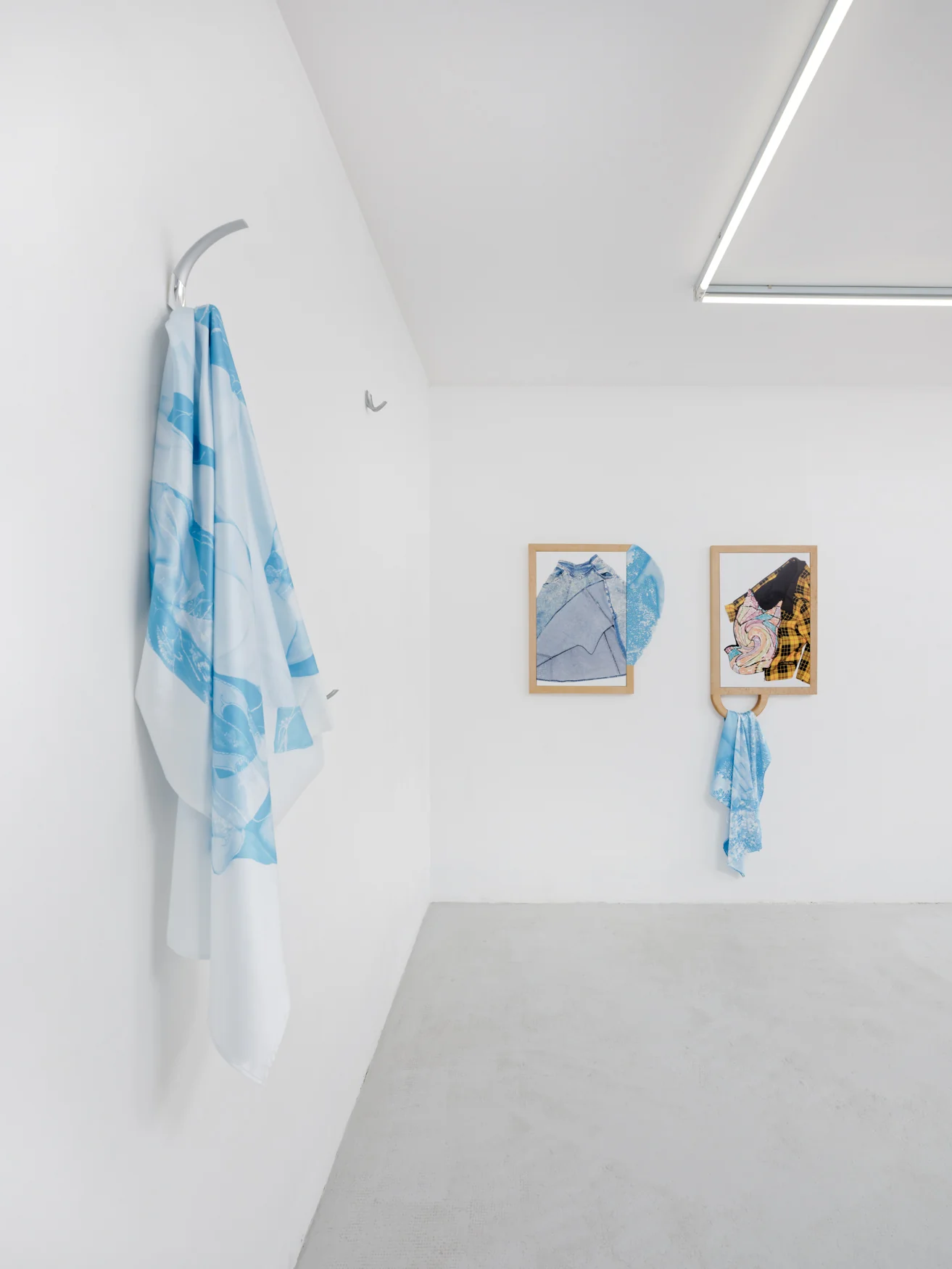
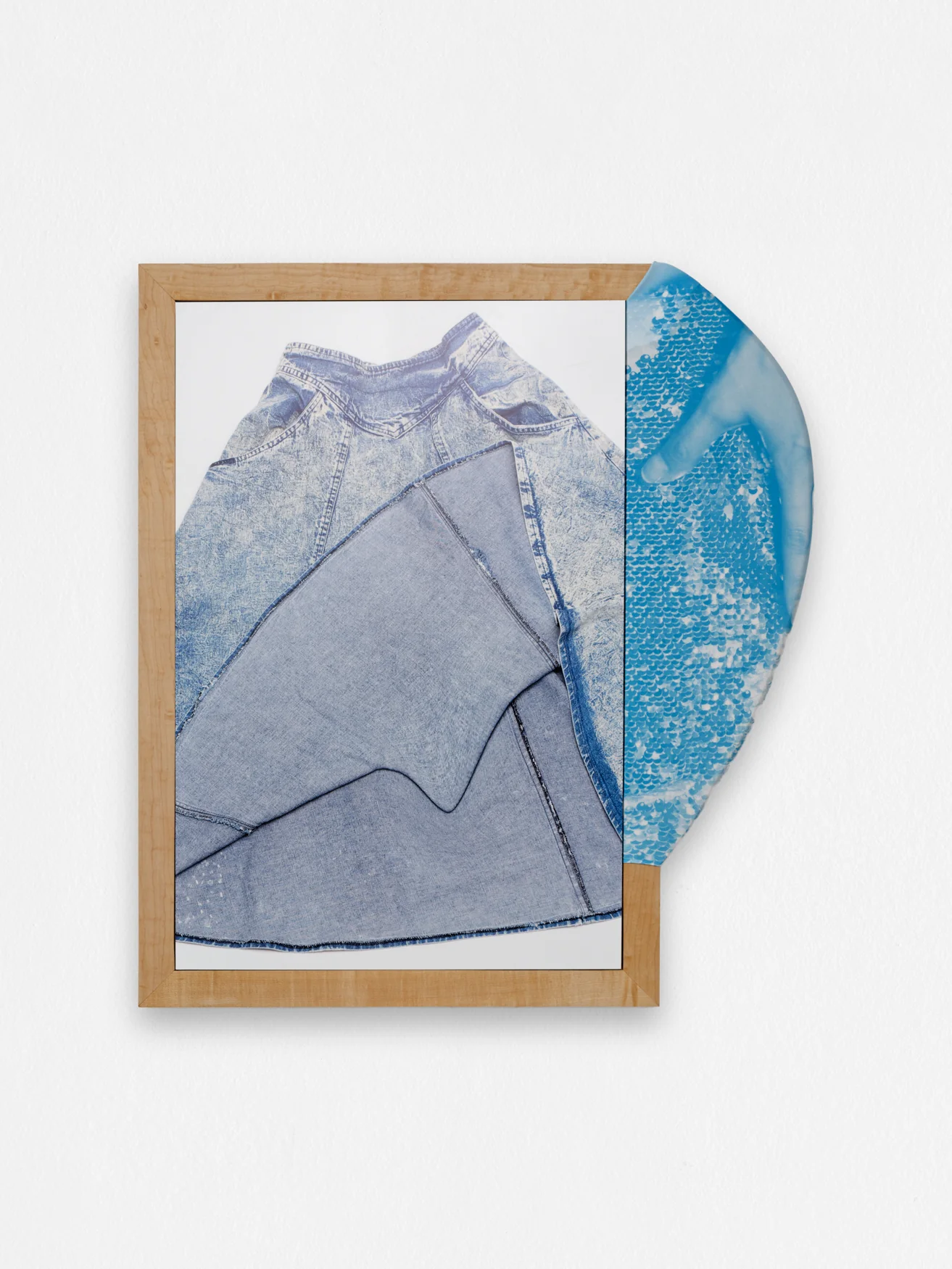
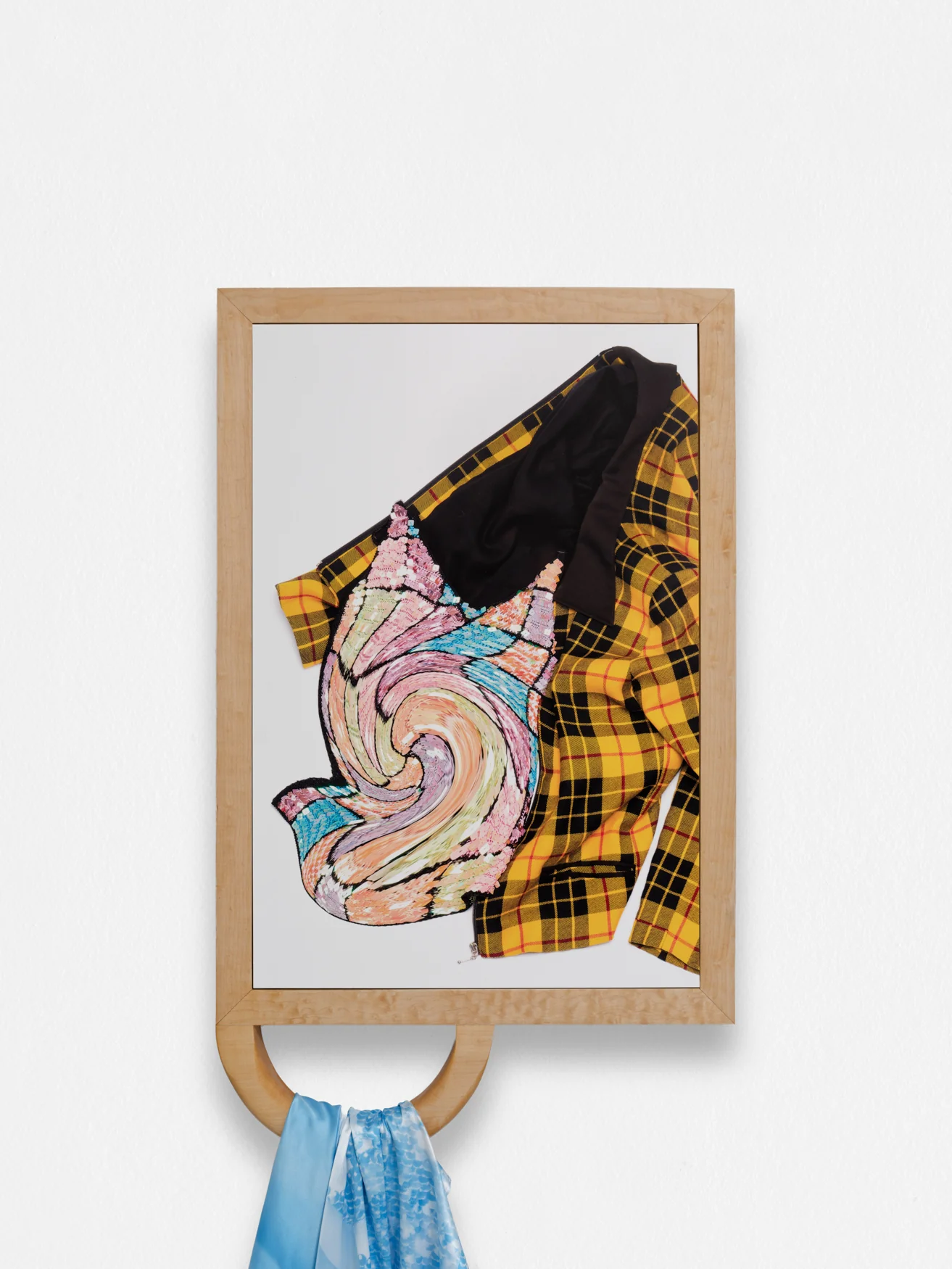
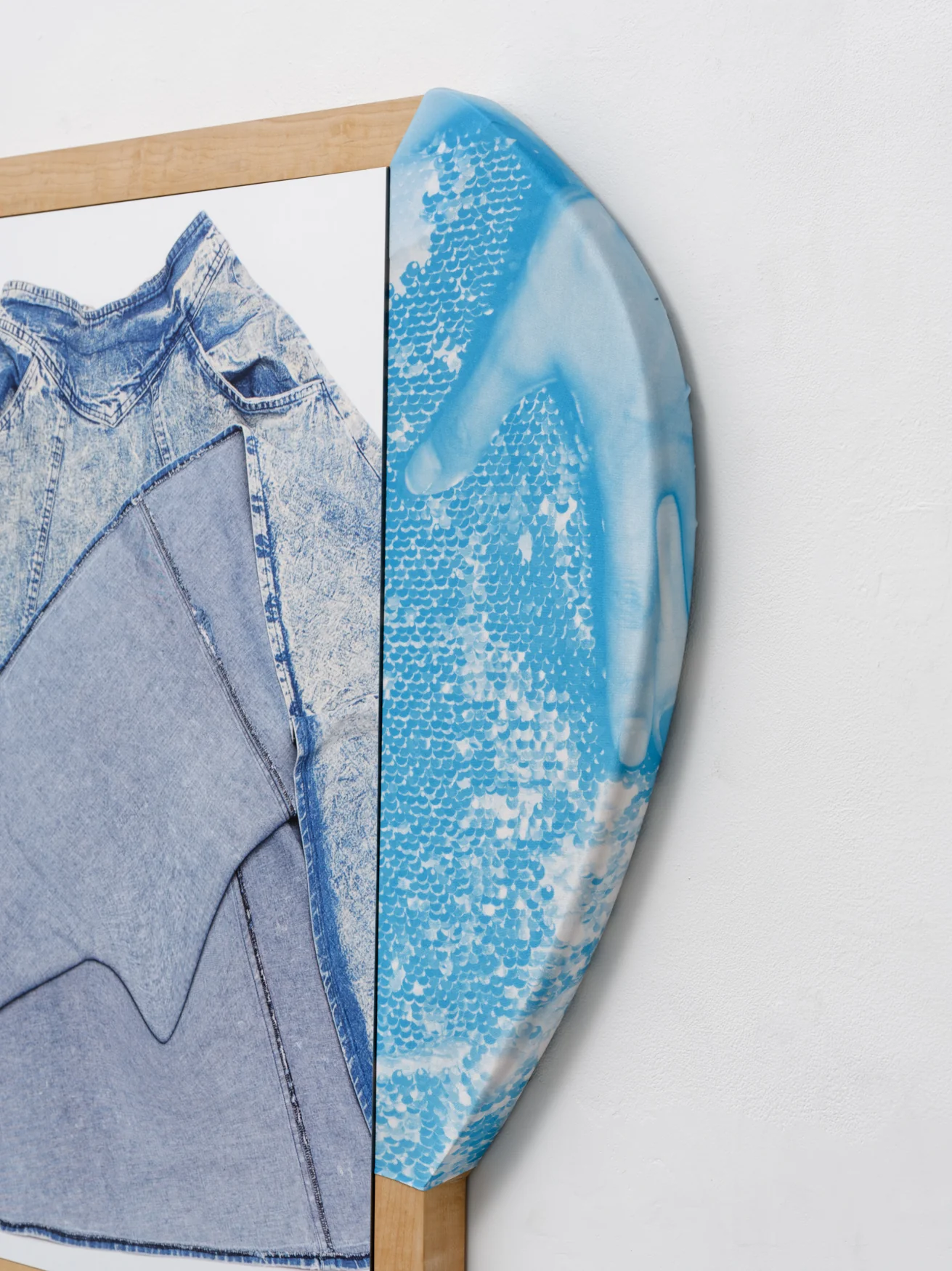
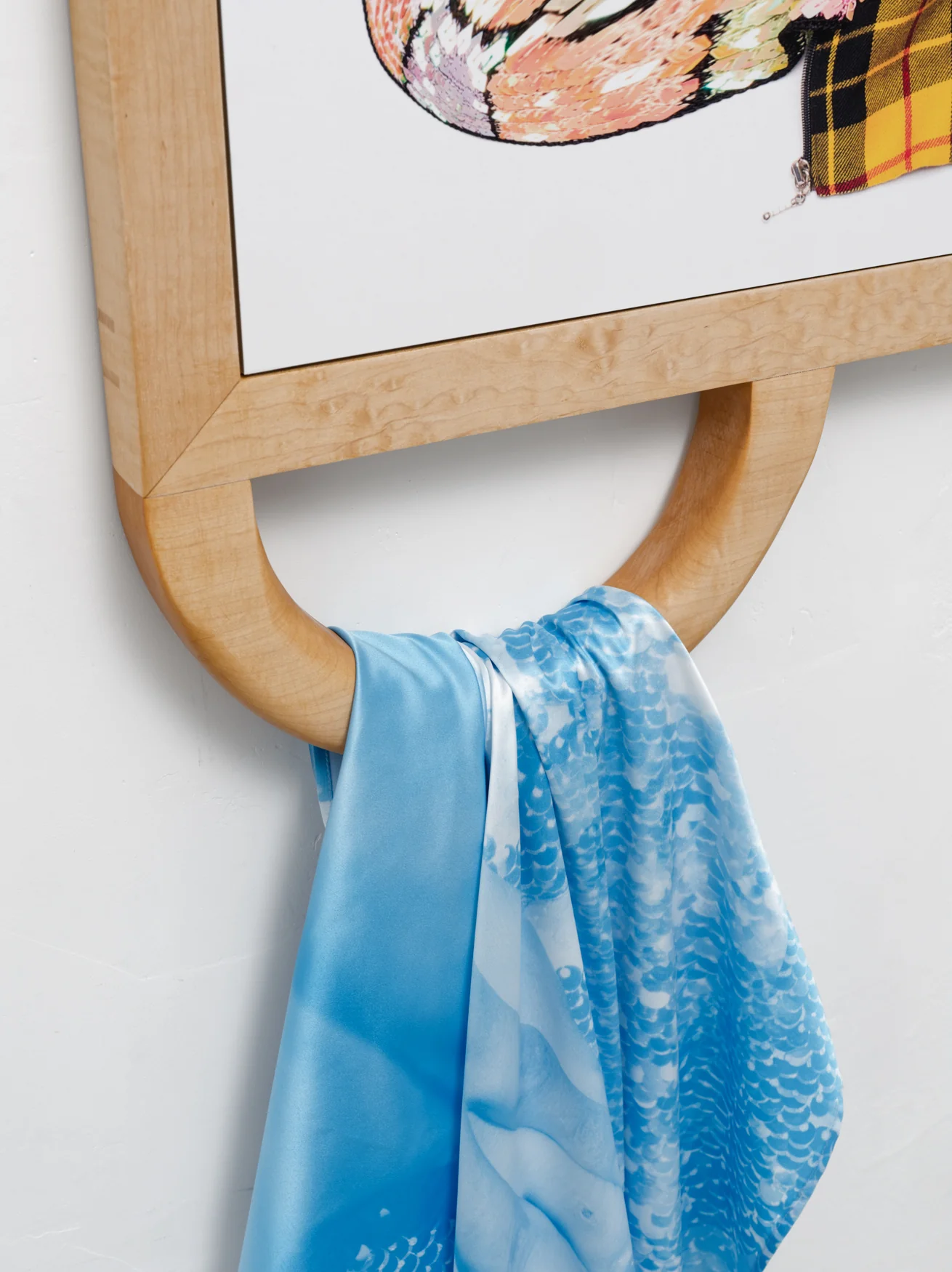
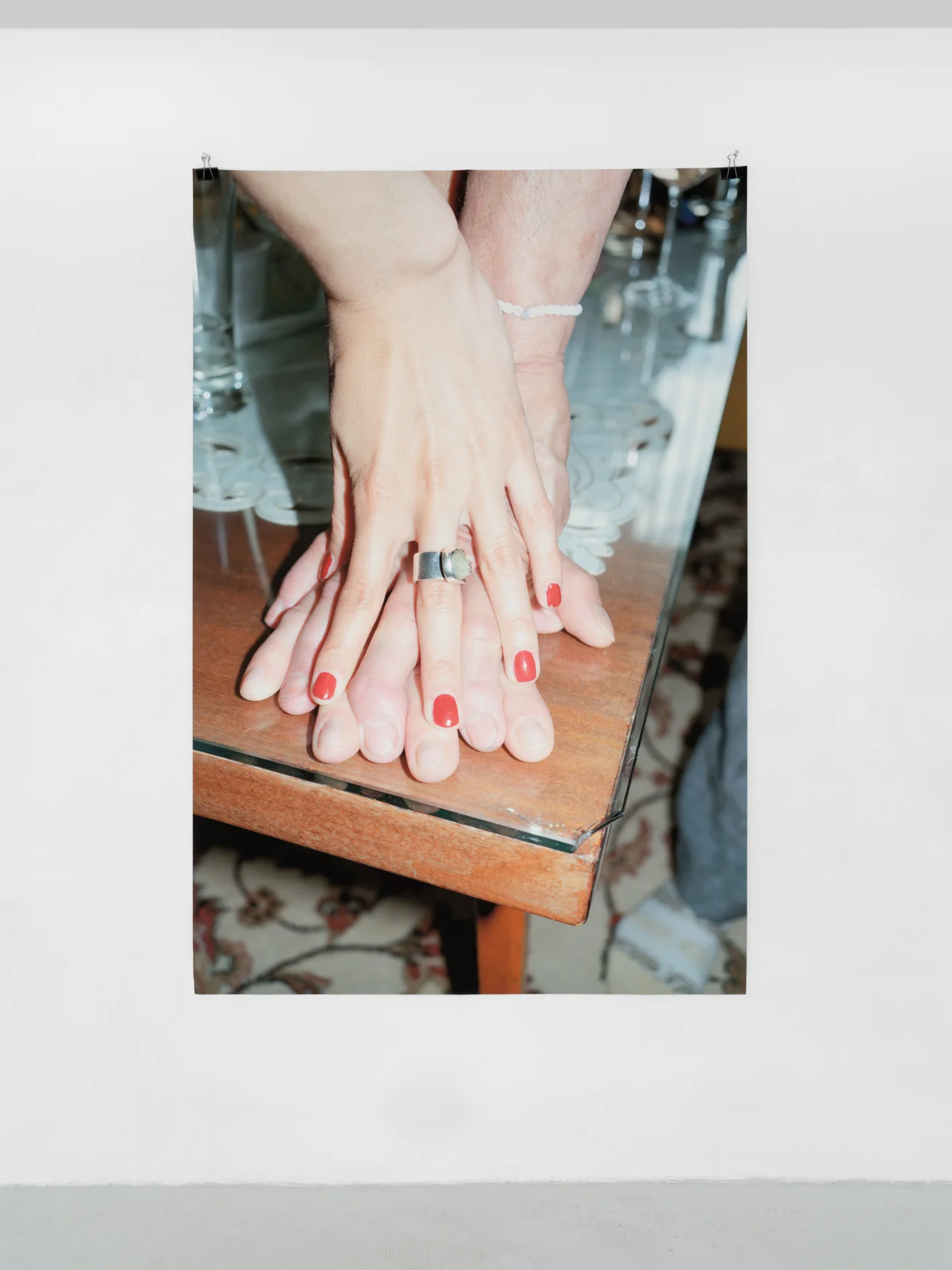
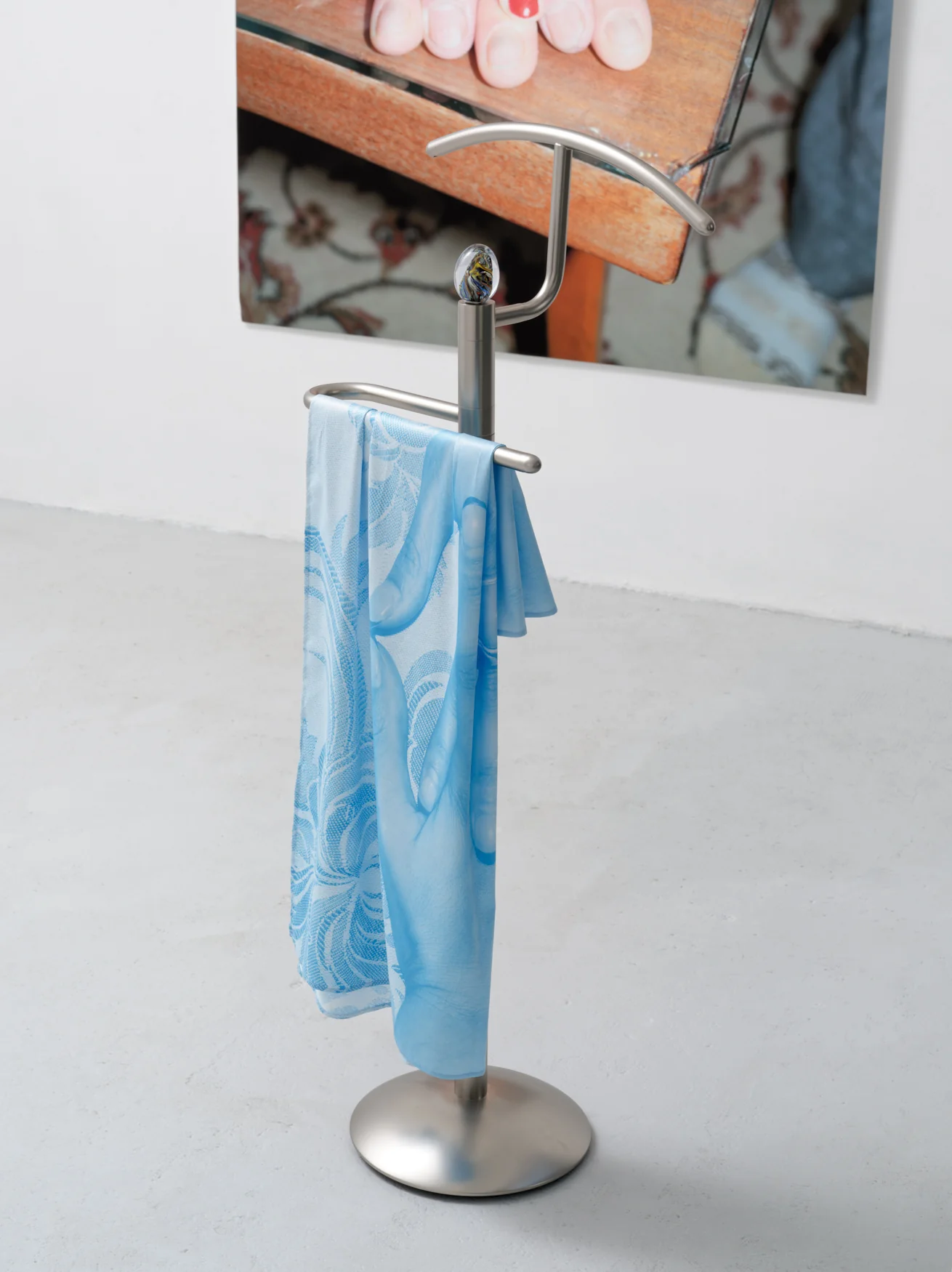
In her work, the artist also refers to concepts developed by Rosalind Krauss, notably the notion of the index: signs that emerge from a physical relationship with the real. In Veronika’s work, this relationship is twofold: the garment bears the imprint of the human body, then the photograph captures the imprint of that garment. In a quasi-performative action, the artist sets about layering and arranging compositions from inherited clothes, which she photographs before modifying them very slightly, producing a strangeness that is hard to detect. This distortion also marks the passing of time and the way our memories change as it goes by. This is what is at stake in the two photographs hung side by side, for which the artist has made wooden frames with an added function: they frame as much as they can be used to hang clothes.
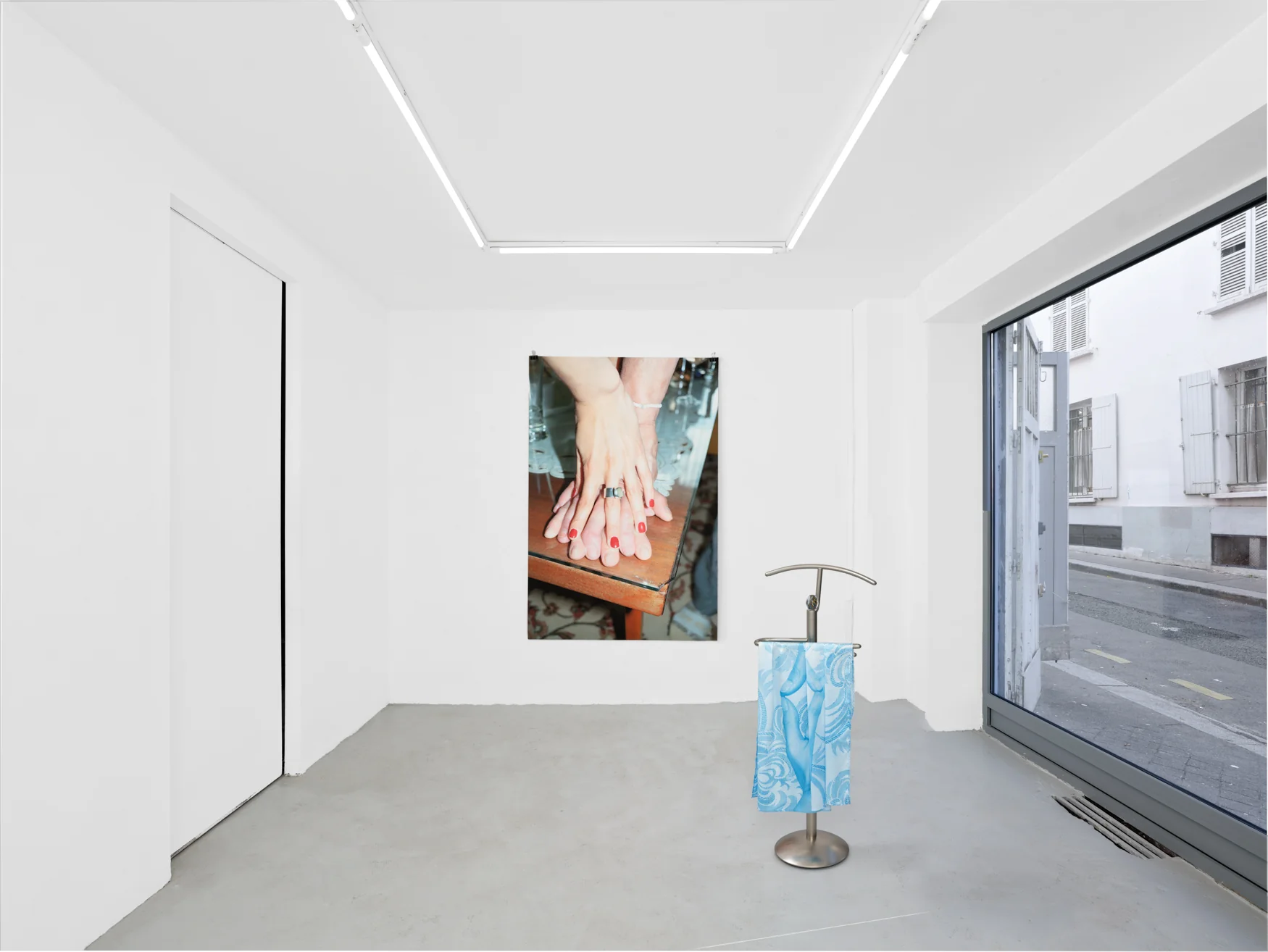
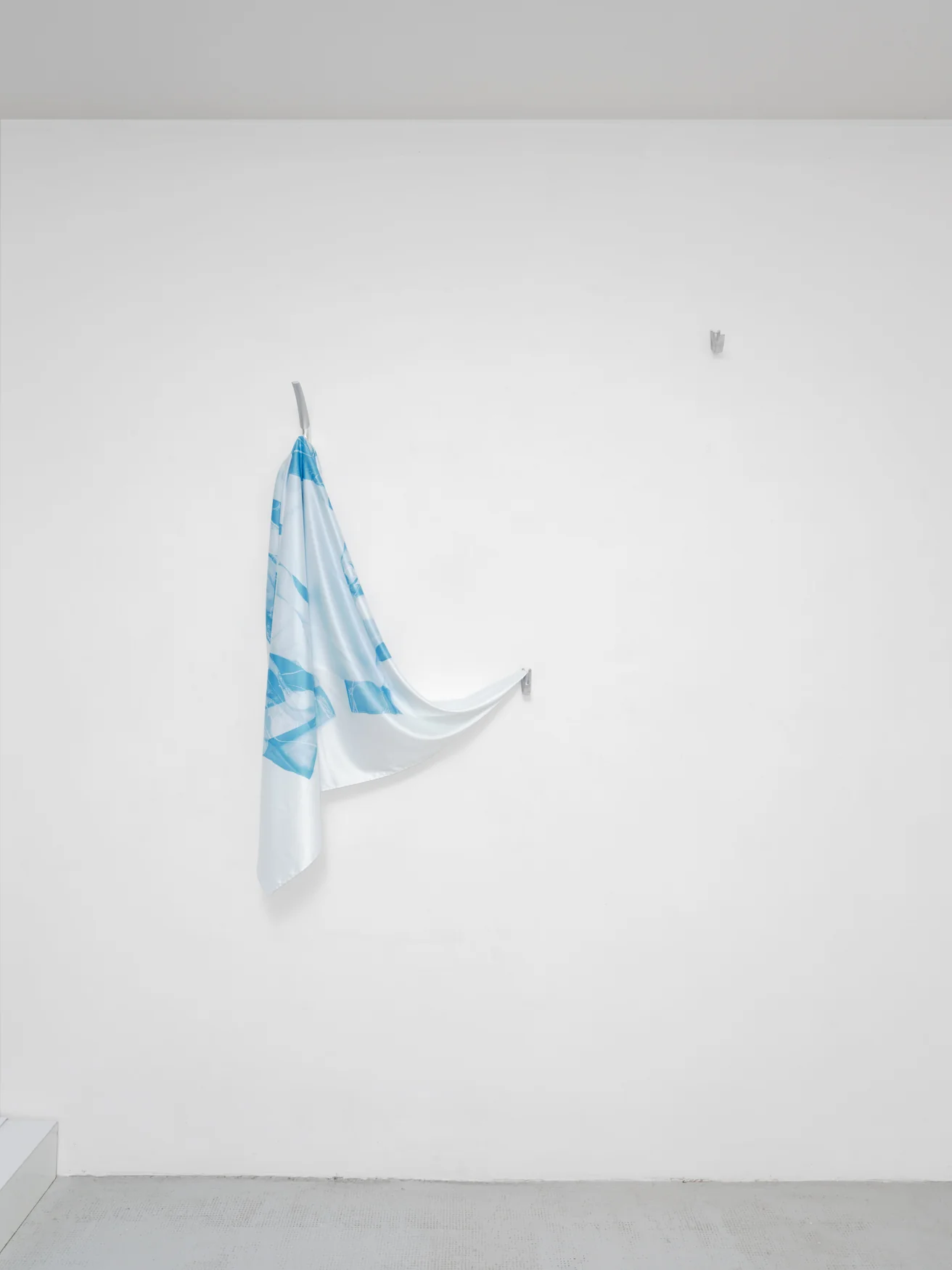
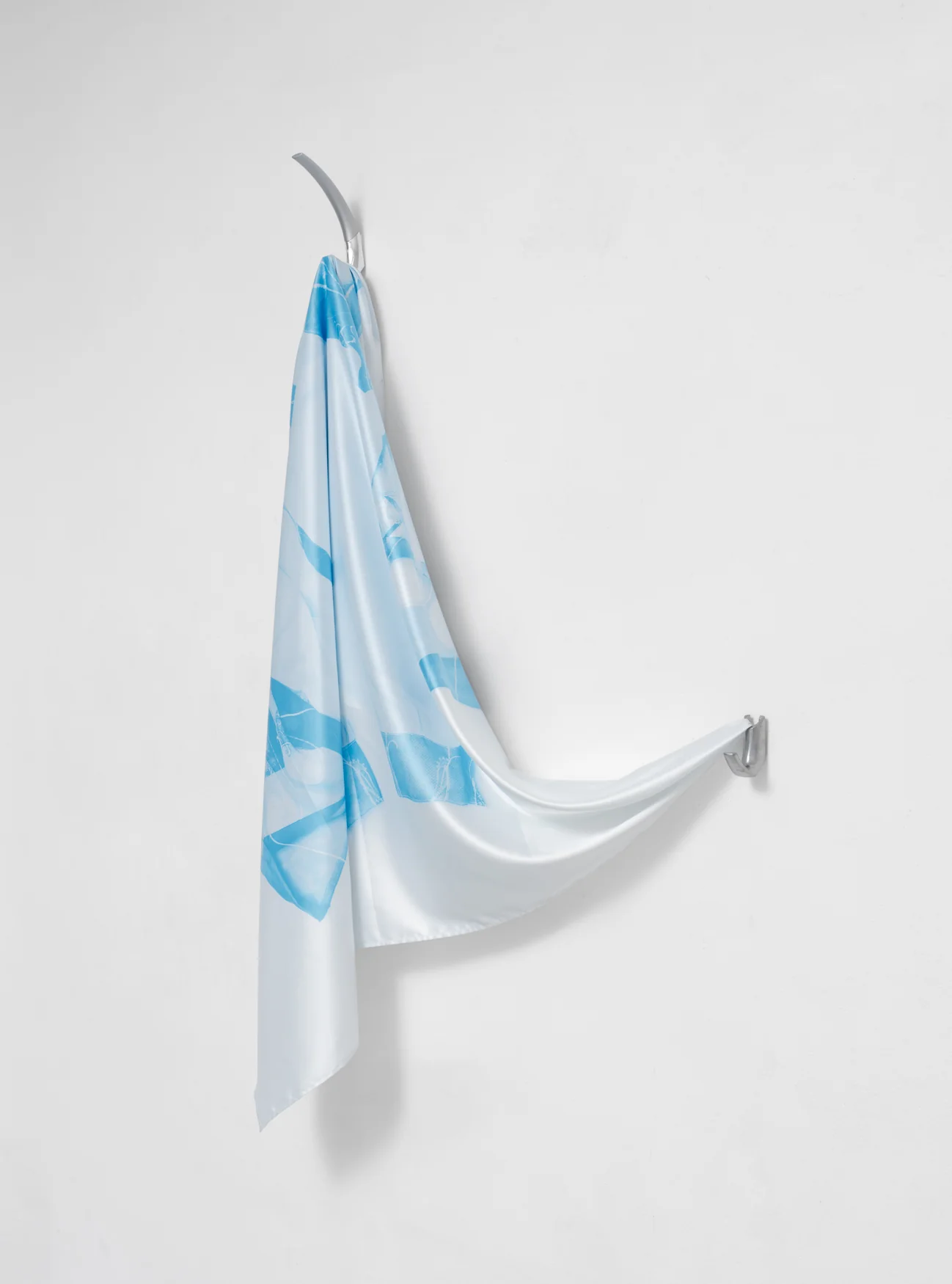
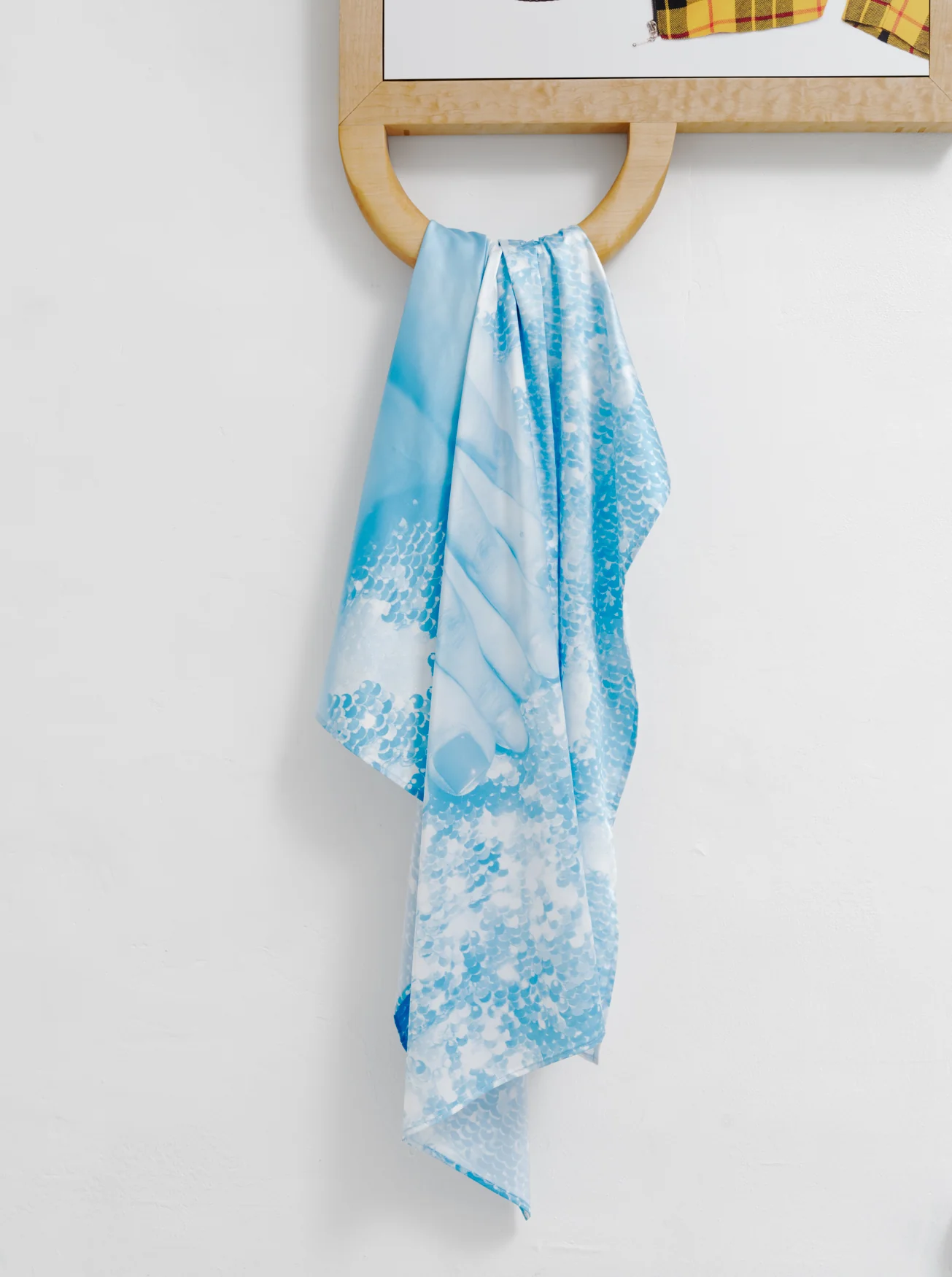
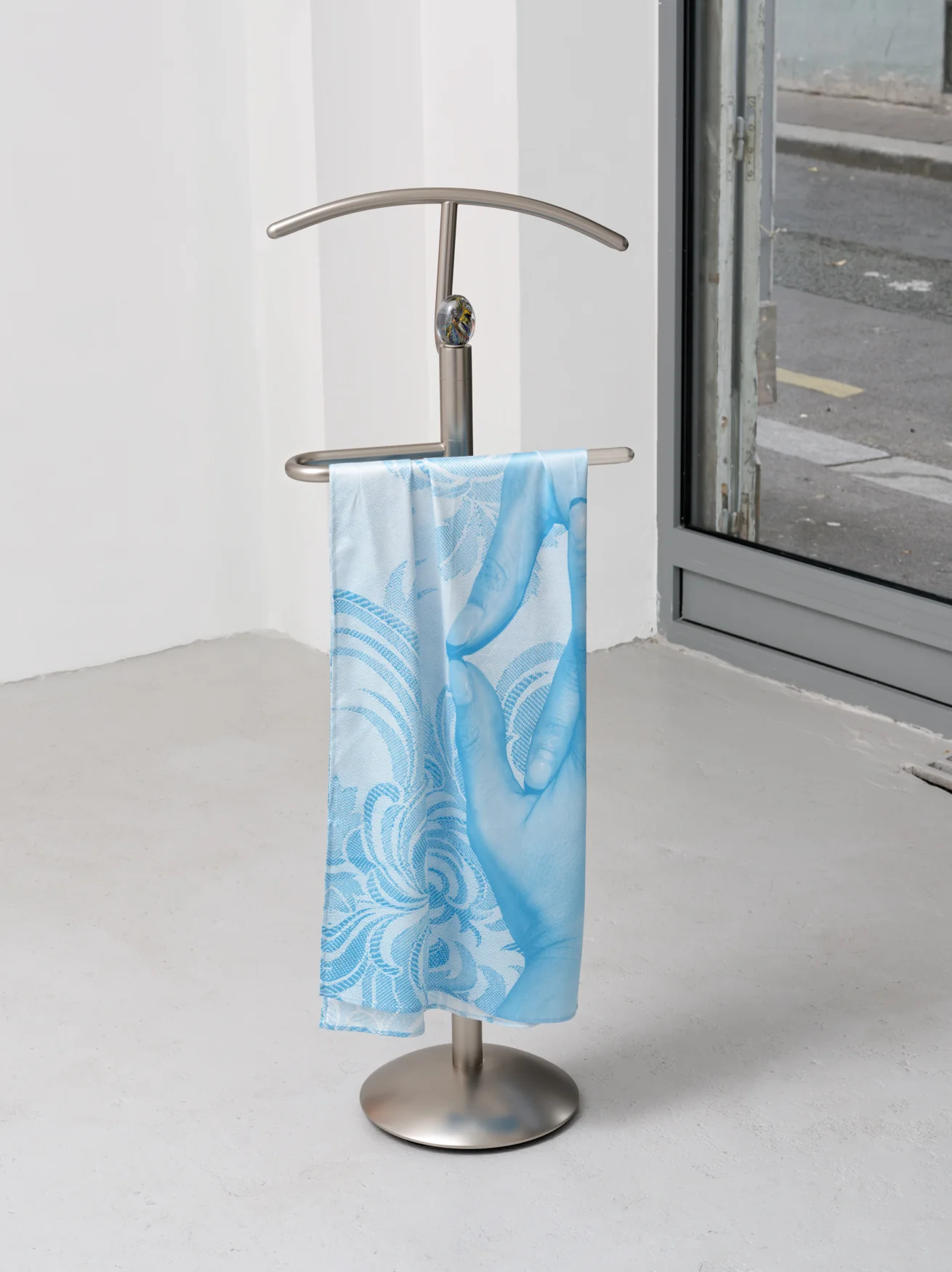
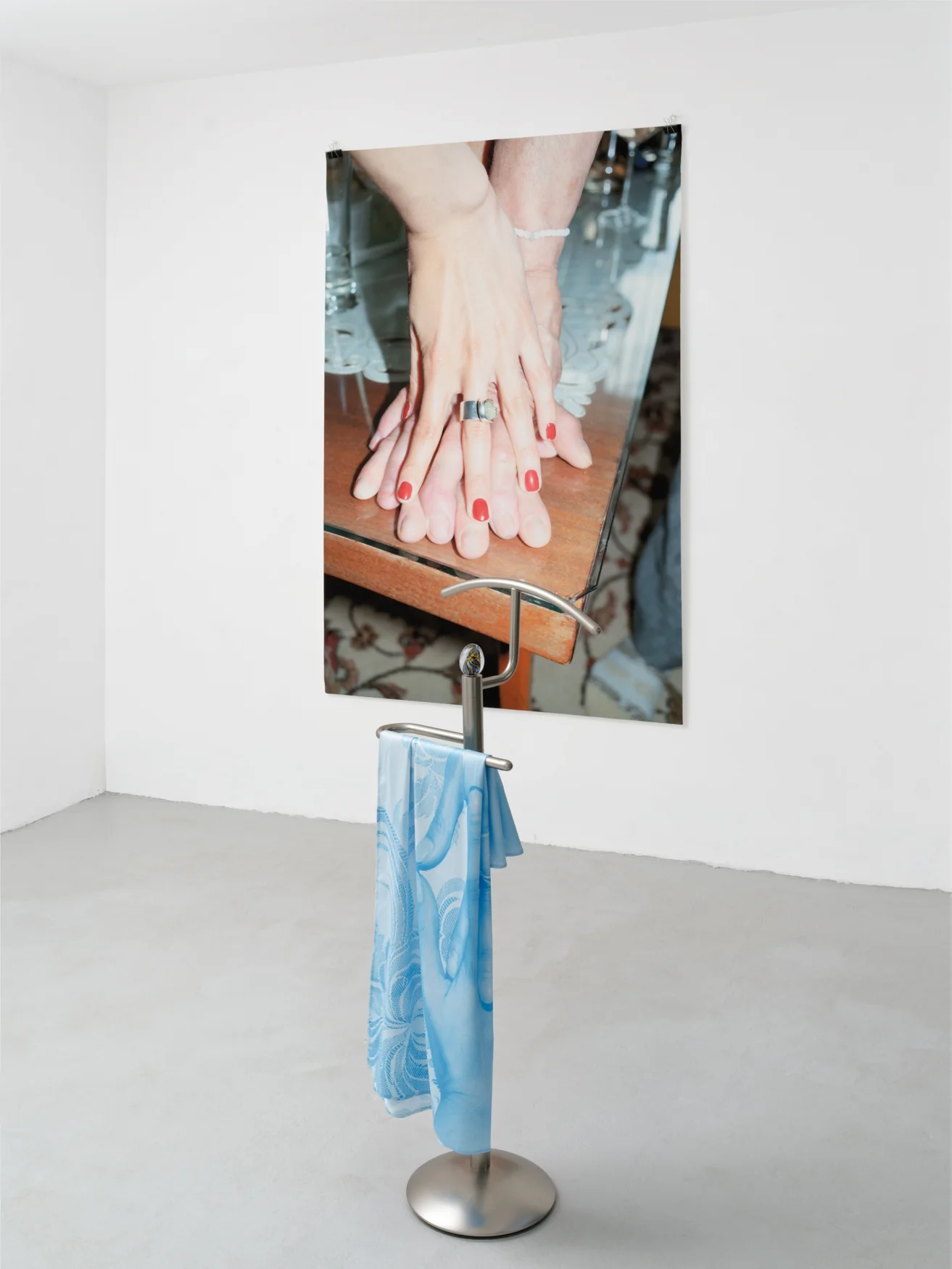
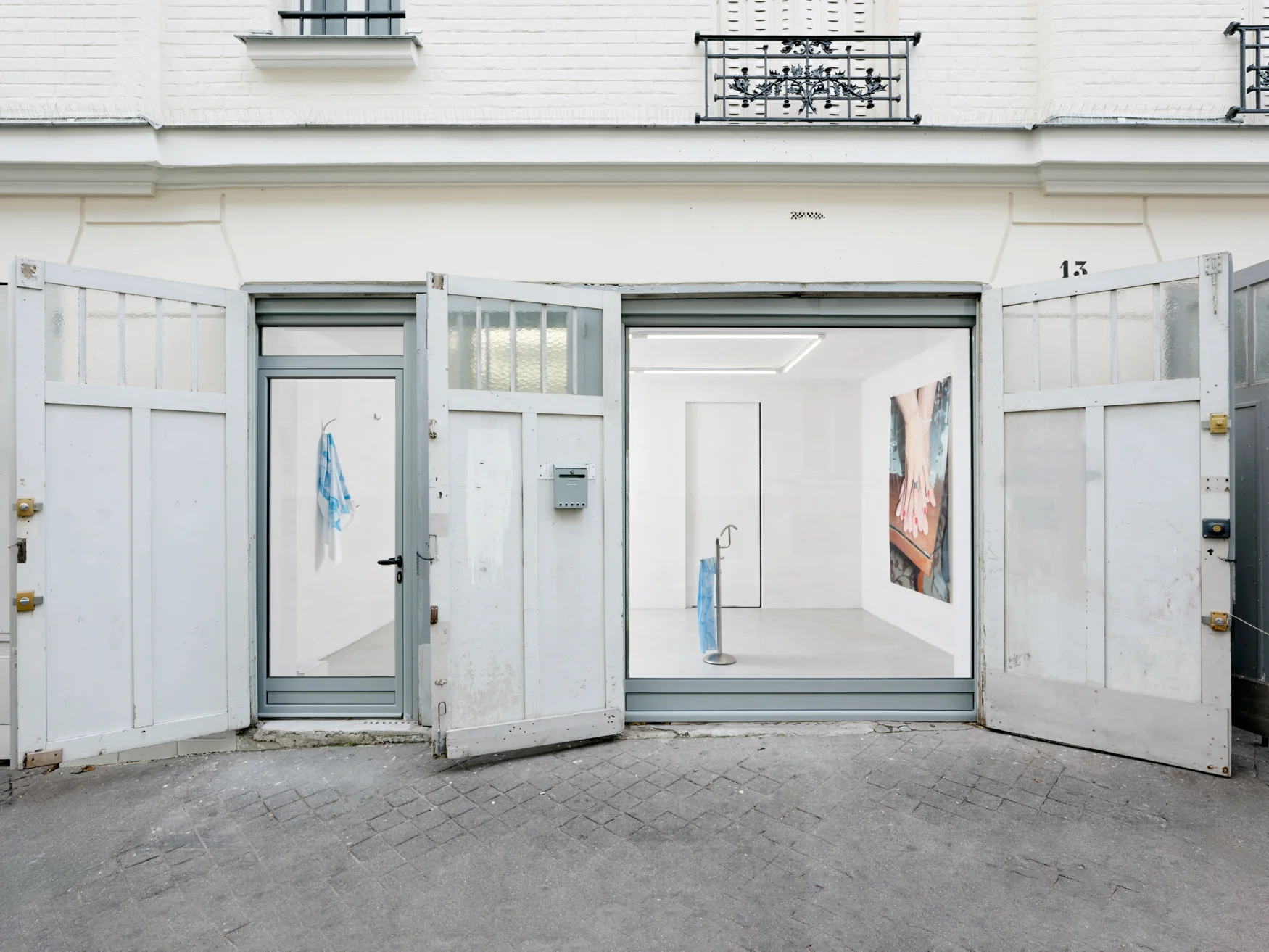
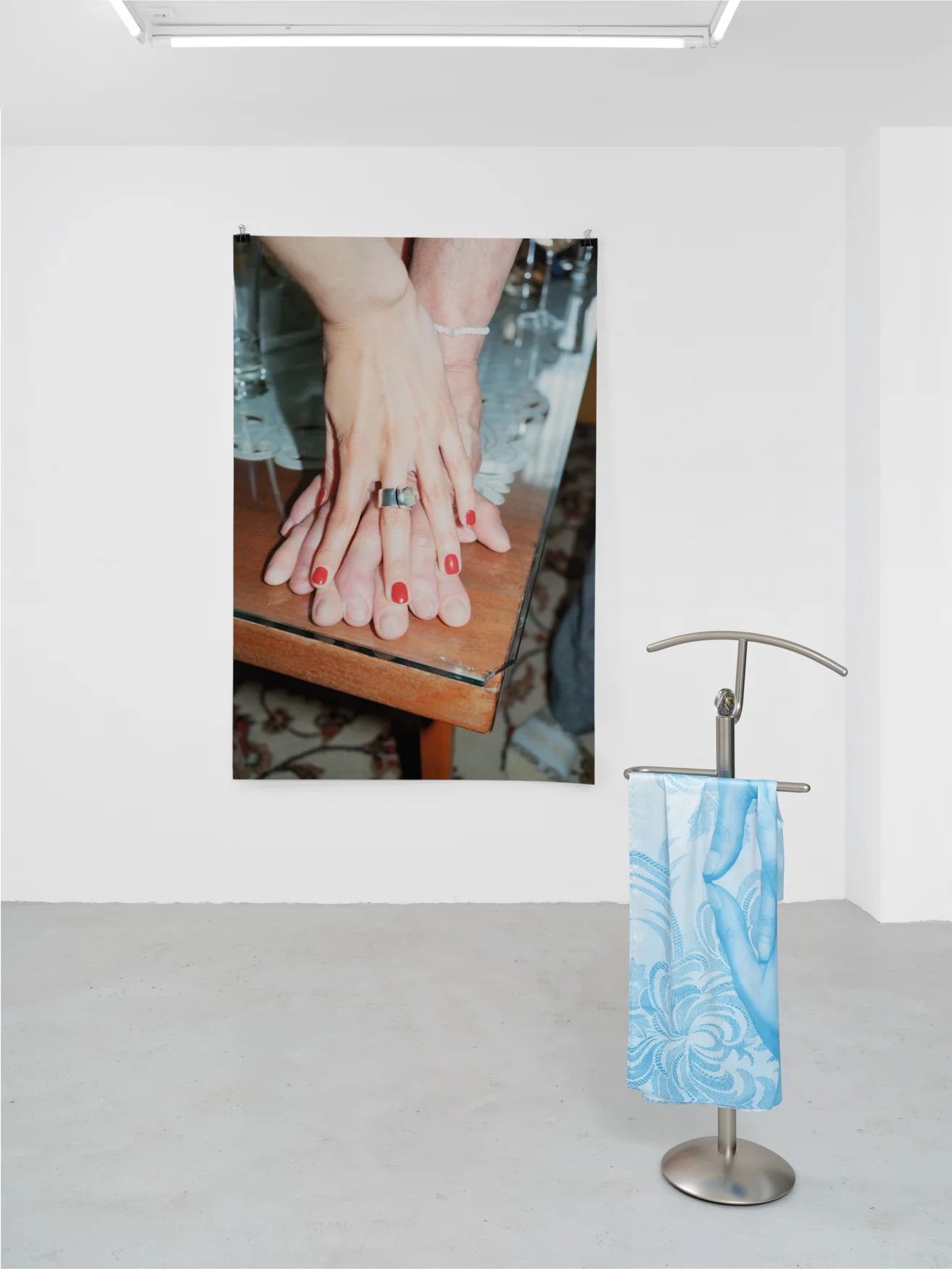
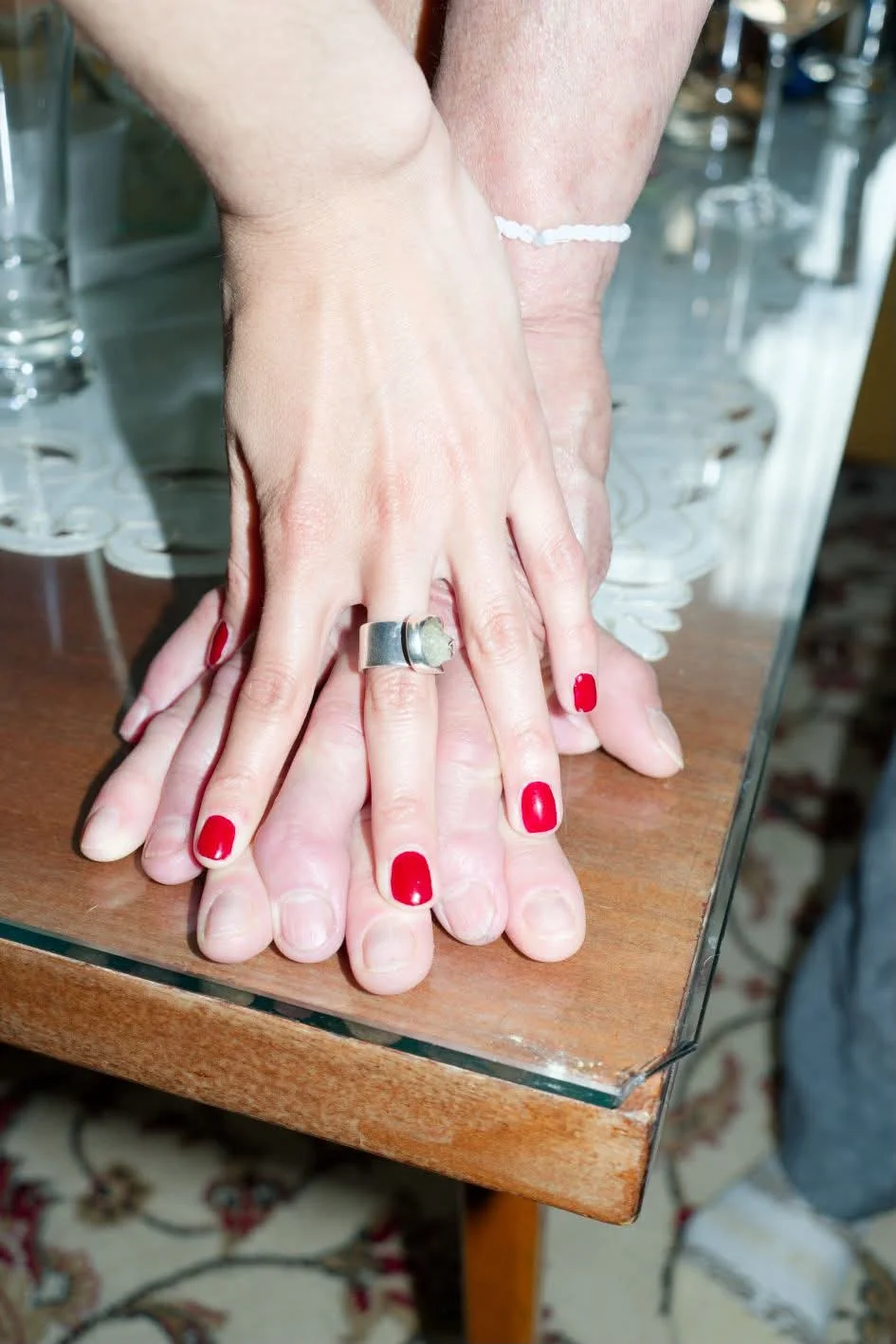
Likewise, the photographs printed on scarves escape their condition as static images, as stable forms. The scarf touches the body, passes from hand to hand, is knotted and crumpled, blurring all boundaries between printed image, textile object and sculptural object. The image printed on it also greets us at the entrance of the space. It is a superimposition of hands that reveals the true purpose of this exhibition, which is also – and perhaps above all – a tribute to those who share Veronika’s life. The hands of three generations of women overlap in a strange pose, pressing against one another, as if embarking on an odd attempt to pass stories on through the palm. Marked to varying degrees by the traces that only time can inflict on bodies, these hands bear witness to the lives of the women they belong to: a daughter, a mother, a grandmother, and as many stories told from one to the next to the next.
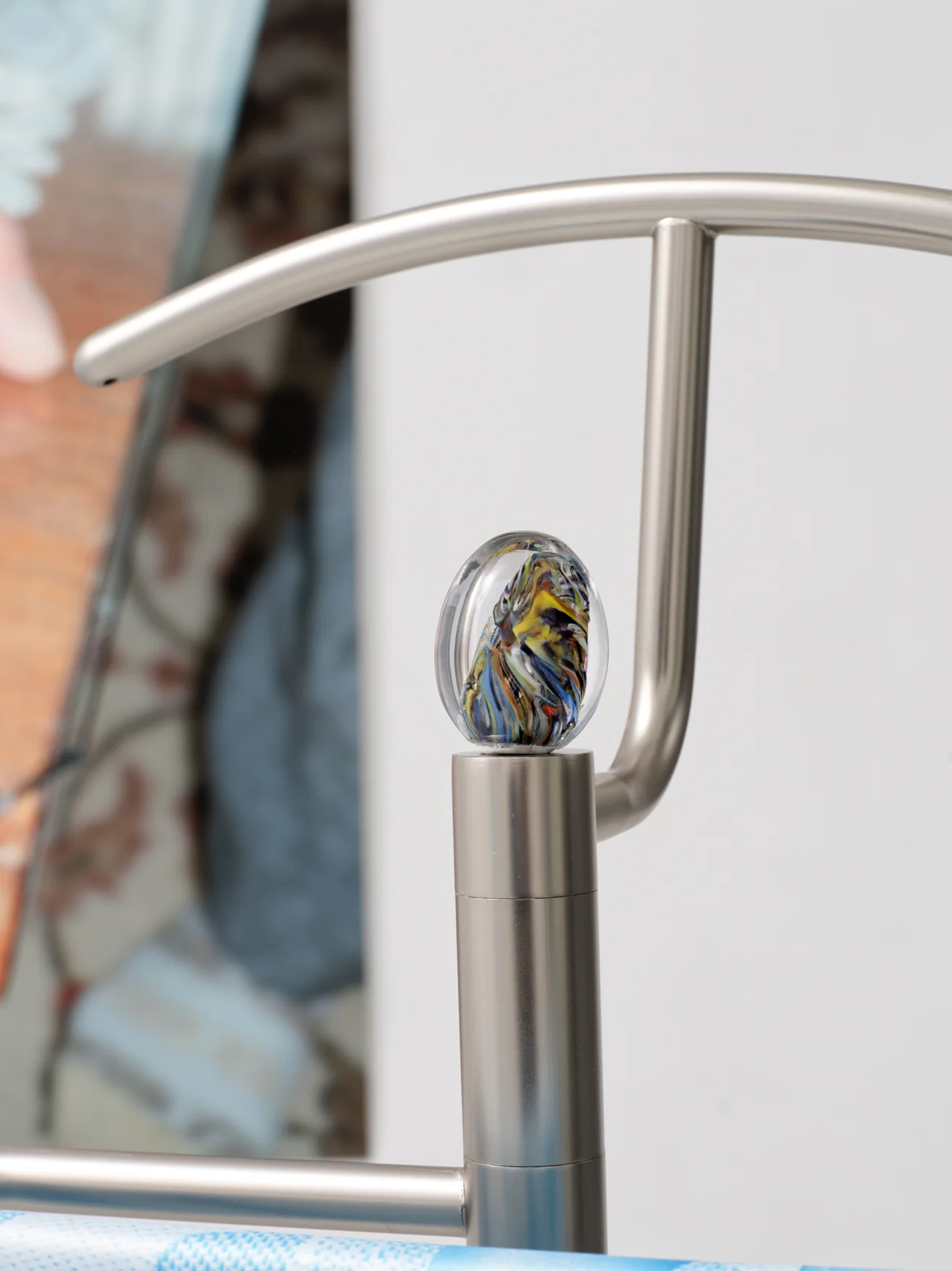
Finally, the clothes rack in the entrance and the hooks on the wall evoke a fitting room, a place where garments wait for new bodies whose identity they may change, and a nod to the artist’s previous project, lejdy lena, which explored the imaginary surrounding clothing. In From Body to Body, these display devices evoke not only a place of storage or waiting, but also and above all a place of transition and transmission, echoing the work of Veronika’s grandmother, a seamstress. Her practice thus resonates with the words of writer Annie Ernaux in The Years, who says she wants, through writing, to “save something from the time when we will never be again”. Just like in this sentence that closes the book, Veronika, through her process of archiving, preserves the traces of an era and the experiences of those who lived it.
The whole invites us to question the ties we have with the objects that pass through our own families: where do they come from, who did they belong to, what functions did they have, and how has their meaning evolved through successive inheritances? At home, it is a bottle of “Fidji” that belonged to my great-grandmother Simone, which I have never dared to spray, and small fabric envelopes she had sewn, whose use I don’t know and which sleep at the back of a closet. I don’t know what these envelopes were, or what they will become, but I know I can’t part with them, and that the bottle, almost empty, will stay on the shelf, intact.
— Text: emploi fictif (Sarah Lolley and Camille Velluet)
Artists in this exhibition
More at JULIO Artist-run Space
More in Paris
Related topics