Essay
Alpha – Omega & Dandelions : the true conversation between being and spirit.
Dayneris Brito on Alpha – Omega & Dandelions at LAC Collection Jean-Michel Attal, curated by Serge Le Borgne.
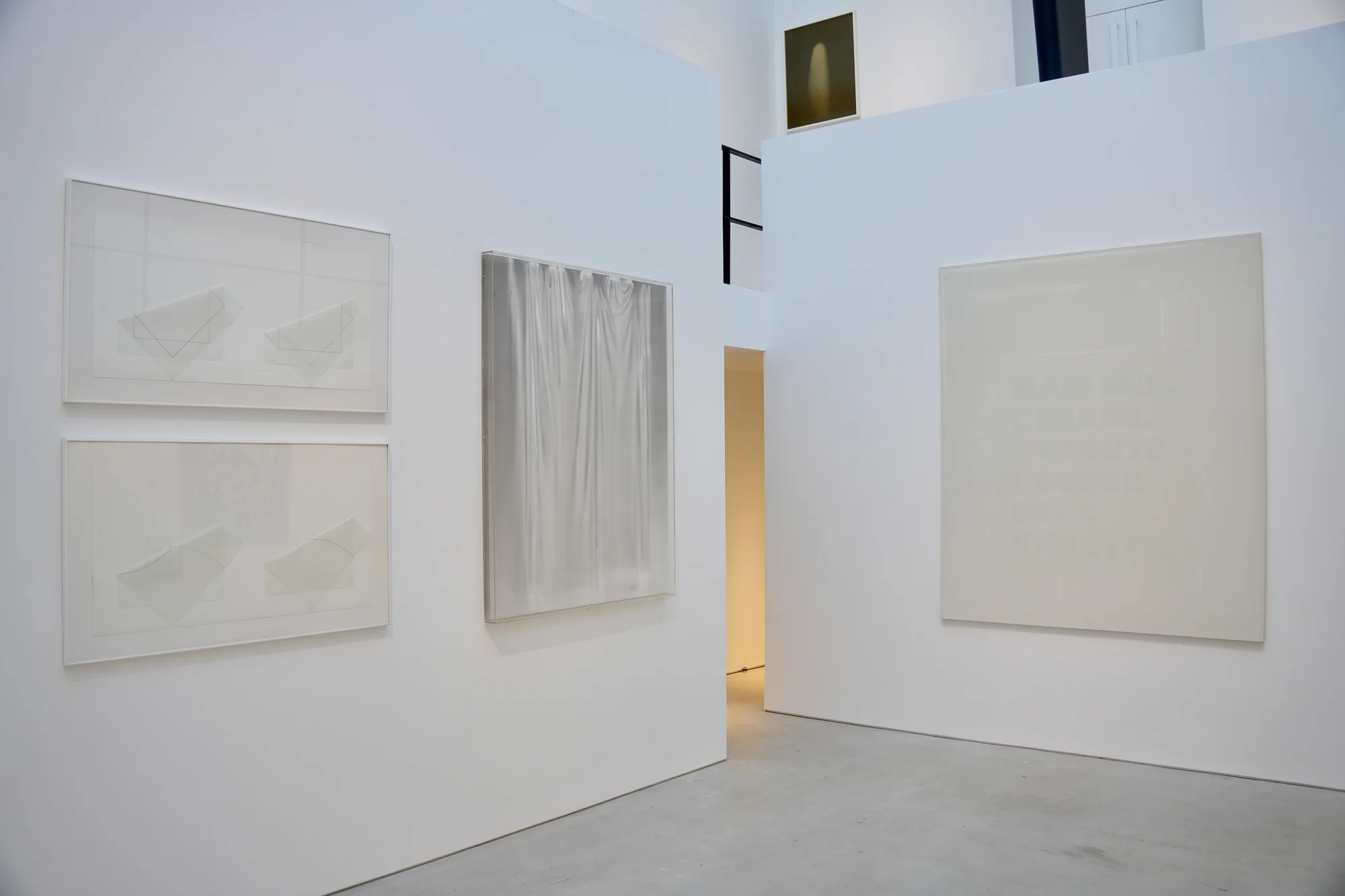
There is nothing closer to life than artistic expression, just as there is nothing closer to death than art itself. Creation, that singular and absolute catalyst for our expressions and states of mind, our suffering, realities and geopolitics, weaves a thread through multiple dualities: high and low, light and darkness, beauty and all that falls beyond it. For in art, there are no definitive distinctions between what we feel and what we are, between what we do and what we experience. Rather, it is perhaps one of the few means of human expression through which truth can emerge in all its inner complexity, running counter to our innate need to understand and categorise every phenomenon of human experience. To create is, in a sense, to accept that existence cannot be reduced to a single, unambiguous explanation; that there are territories of consciousness that can only be traversed through the realm of sensory experience.
The current exhibition presented by Loukoums et Art Contemporain – Collection Jean-Michel Attal, curated by former Parisian gallerist Serge Le Borgne and comprising exclusively works from the Attal Collection, housed within the space itself, is precisely that: a complex, interconnected fabric of multiple dualities, or at least many of those familiar to us: life and death, appearance and disappearance, birth and ending. Hence the title chosen by the curator, Alpha – Omega & Dandelions, which directly alludes to those entre-deux, those complexities of the soul and of human existence that are neither beginning nor end, but rather an intermediate space oscillating between the desire to become and the absurdity of existence, between the suffering of illness and the erosion of the human condition. A compelling metaphor for our contemporary world, divided, segregated and, in many respects, gangrened by the political and social absurdities in which we find ourselves immersed.
The title itself seems to contain a deliberate contradiction. While Alpha and Omega evoke beginning and end, a temporal totality that aspires to encompass everything, the dandelions —a reference to Michel François's installation Atelier pissenlits (2005), presented in the exhibition— introduce another dimension: that of fragility, ephemerality and dispersion. Their seeds travel, disappear and take root again in unpredictable places. There is a striking correspondence here with the human condition and with the very nature of art: what disappears does not necessarily cease to exist; what fades away may find other forms of permanence. Between origin and ending, therefore, lies a territory of passage, transformation and uncertainty. And it is precisely within this space that the exhibition seems to position itself.
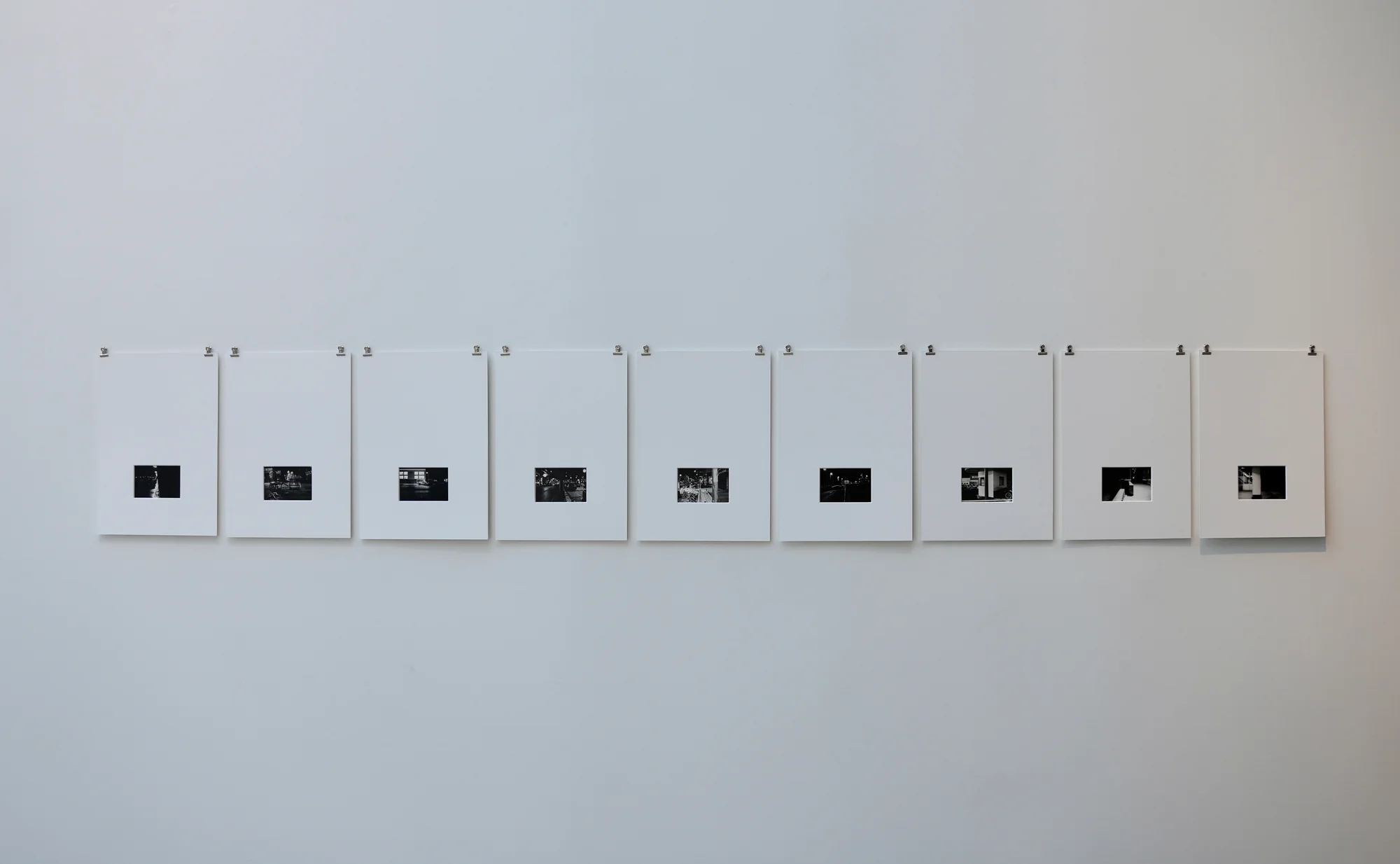
The works selected by Serge, previously acquired through the discerning eye of collector Jean-Michel Attal, are neither strictly figurative, photorealistic nor performative. Rather, they elude any attempt to confine contemporary art within the terminology of art-historical classification. They are gestures, reflections and impulses situated at the threshold between the fact of existing and the delicacy of disappearing. Within them emerge the phantasmagorical (Dove Allouche, Gas and Dust II, 2001), the absurd and self-destructive (Thierry de Cordier, Snow me (Undercover), 2002), the unpredictable and inexplicable (Christine Borland, Treasury of Human Inheritance (Sedgwick’s Case), 2000), and that which remains invisible yet transforms itself before our very perception (Claudio Parmiggiani, Senza Titolo, 2008). They also evoke those moments and balconies opening onto the void from which the individual —beyond class, generation or origin— attempts to make sense of their own existence.
What is particularly interesting is that these works do not appear to seek an immediate correspondence with the external world. They do not need to reproduce it in order to speak of it, nor represent it in order to expose its contradictions. Their language operates elsewhere: in the realm of suggestion, absence, trace and evocation. At times, what we see is nothing more than the remnant of something that has happened or is on the verge of disappearing. At others, we encounter a presence that resists identification (Gregor Schneider, Der Deutsche Beitrag, Muschel, Venedig, 2001), or a material substance that seems to contain a memory preceding our own experience (Imi Knoebel, Jena 6, 1996). It is here that the exhibition acquires a particularly evocative dimension: the works emerge as surfaces of resonance onto which we project our own experiences, fears and contradictions.
There is another line of thought that the curator, according to the exhibition text, wishes to bring into focus: the act of pausing before a work of art, the re-emergence of perception, understood as a territory at risk of extinction in the face of hurried, fleeting visits to contemporary art museums and the filtering imposed by the cameras on our phones. Looking no longer simply means recognising what stands before us, but rather granting it the time it needs to reveal itself. To understand this exhibition, one must pause, learn to take ownership of one's own perceptual choices and allow the intellect to guide us towards an understanding of matter, form and concept. But one must also accept that not everything can be understood immediately. Perception is neither a passive act nor an exclusively intellectual operation. It demands that we remain before what we do not know, tolerate uncertainty and allow the work to generate within us an experience of another kind.
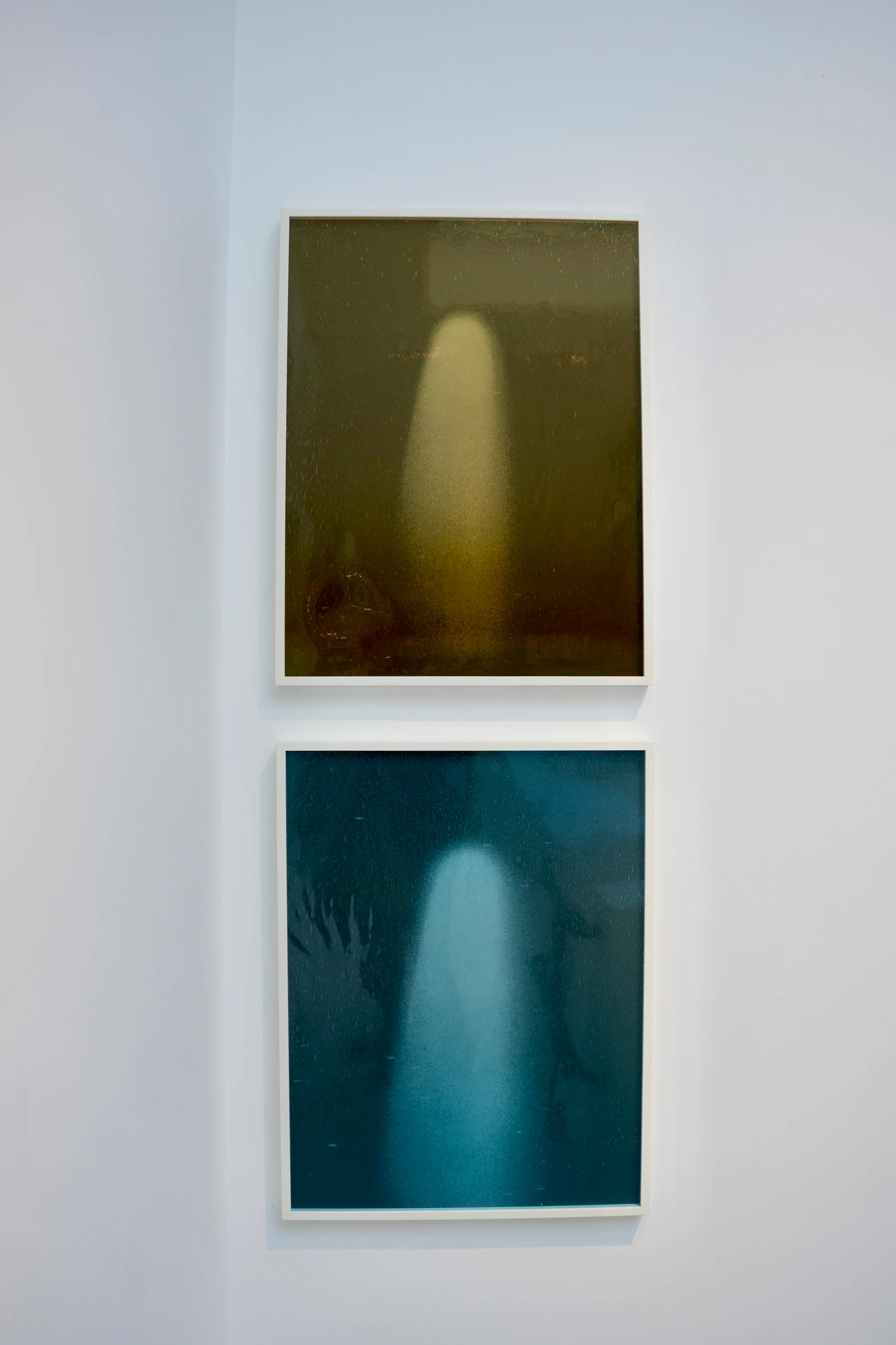
The exhibition itself is phantasmagorical, abstract, immaculate, pristine. There is no prescribed route through it, no preconceived narrative, no unifying theme. Instead, it unfolds as a passage through diverse emotional universes and experiential situations, whether through the playful engagement with the consumption of drugs —as in the work by the duo Brognon Rollin, Le Grand Voyage (2012)— or the conceptual exercise surrounding Lenin by Art & Language, Portrait of V.I. Lenin by V. Charangovitch (1970) in the style of Jackson Pollock III (1980). Yet none of this can be fully articulated unless we accept that what we are facing is an absolute exercise in perception: an overwhelming experience that exceeds the limits of our understanding and confronts us with what the white cube itself is capable of offering.
This is not, then, a matter of speculation or abstract intellectual conjecture; nor is it about the complacent praise of one artist or another, or the showcasing of some supposedly promising emerging talent. Rather, it is a visual journey that is neither art-historical nor retrospective, but an invitation to walk the tightrope of the ethereal and the invisible. An invitation to recover what the saturation of images, the accelerated pace of our societies and the very institutionalisation of art seem to have relegated to the background: the possibility of experiencing without the need to classify, of feeling without the need to explain, and of looking without immediately seeking to possess what we see.
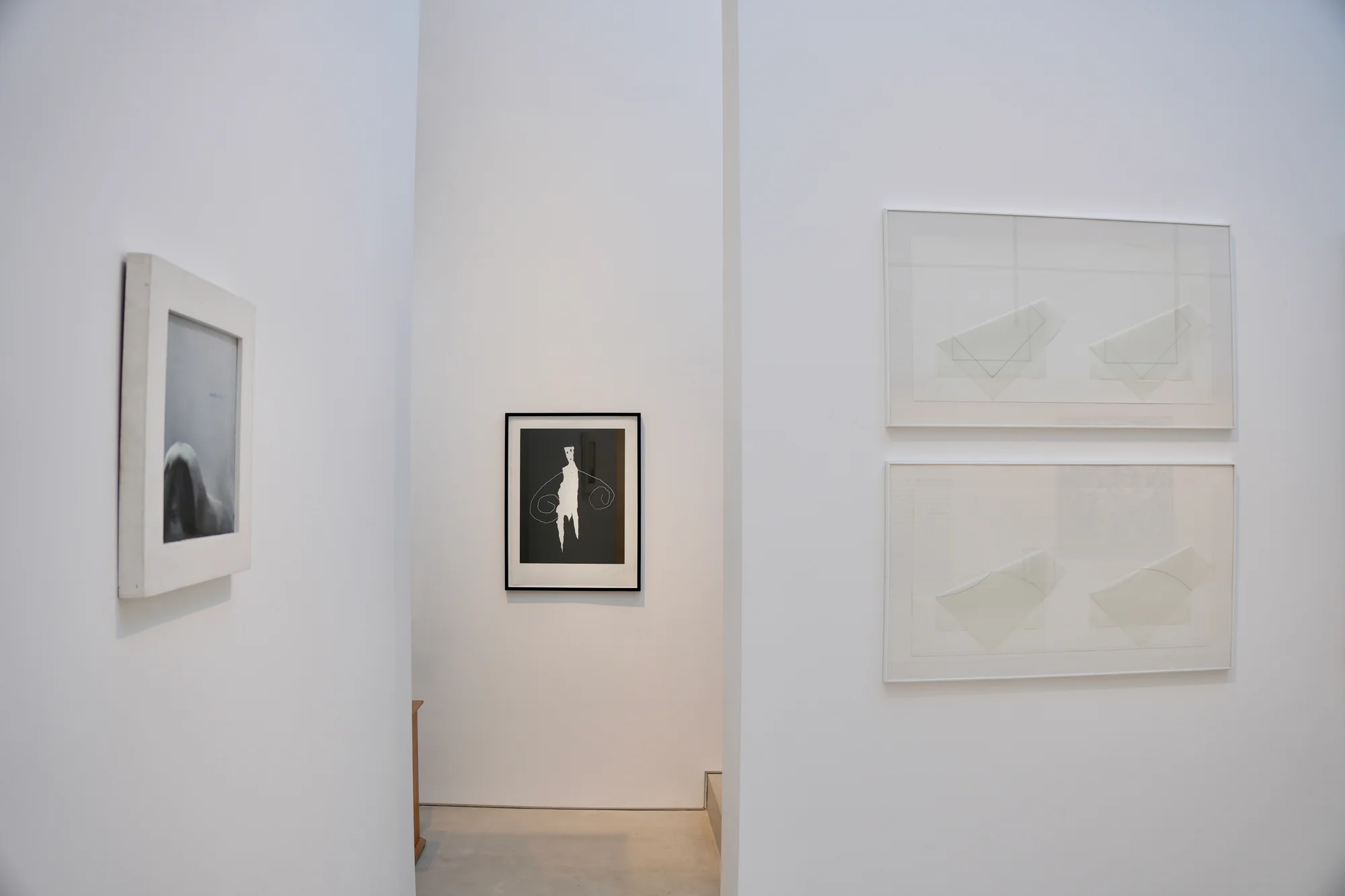
Perhaps this is Serge Le Borgne's true proposition: to return us to a state of perception that precedes interpretation, to that fleeting instant in which the artwork has not yet been absorbed by discourse or judgement. What art has forgotten to represent, or perhaps has never been entirely capable of representing, is precisely this: the true conversation between being and spirit.